| "In this timely contribution to the history of women's monasticism, Bruce L. Venarde has discovered information about the feminine experience previously thought to be unavailable ... A very original book." ---Constance B. Bouchard, author of Holy Entrepreneurs: Cistercians, Knights, and Economic Exchange in Twelfth-Century Burgundy |
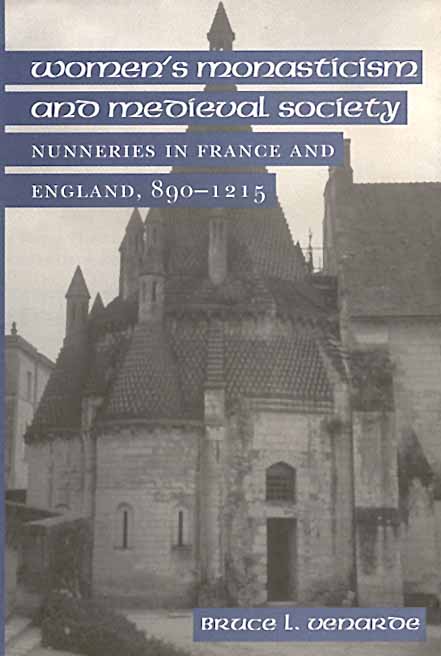 In this innovative and engaging work, Bruce L. Venarde uncovers a largely unknown story of women's religious lives and puts female monasticism in the mainstream of medieval ecclesiastical history. Venarde deftly interweaves narrative and statistical data to describe in broad historical context the multiplication of French and English nunneries during the central Middle Ages.
Venarde shows that in the years 1000-1300 the number of nunneries within Europe grew tenfold. In the eleventh and twelfth centuries, religious institutions for women developed in a variety of ways, mostly outside the self-conscious reform movements that have been the traditional focus of monastic history. Not reforming monks, but wandering preachers, bishops, and the women and men of local petty aristocracies made possible the foundation of new nunneries. In times of increased agrarian wealth, decentralization of power, and a shortage of potential spouses, many women decided to become nuns and proved especially adept at combining spiritual search with practical acumen.
This era of growth came to an end in the thirteenth century, when forces of regulation and changing economic realities combined to reduce substantially the rate of nunnery foundation; female religious innovation moved outside the cloister. But for the entire central Middle Ages, Venarde concludes, the factors encouraging expansion of men's and women's monasticism were far more similar than scholars have realized.