The University of Pittsburgh has made remarkable progress in recent years in student demand and quality, research funding, and private support. Between 1995 and 2000, applications for the fewer than 3,000 slots in the freshman class on the Pittsburgh Campus increased by 71%, to nearly 13,500. The quality of the enrolled students improved significantly: since 1995, the percentage of entering students in the top 10% of their high school class increased from 21% to 34%; and SAT scores are up by 50 points, to 1189. Nearly a quarter of the entering class is Honors College eligible, up from 14% five years ago. Research funding, a measure of the competitiveness of the University's faculty and programs, is up a remarkable 41%. Private voluntary support, a demonstration of the confidence that individuals and foundations have in the University, increased by 83%. The University's endowment has grown by 112%--well above the national average--to over $1 billion. Clearly, the perceived value of the University has increased considerably.
Such success has been achieved through a relentless focus on quality-in teaching, in research, and in service. Continuing improvements in quality are critical for the University to attract the talented students and faculty that the Commonwealth requires to develop the new economy and to compete in world markets. While such significant improvements have required considerable additional financial investments by the University, those investments were coupled with a comprehensive program to reallocate resources from lower to higher priority areas, to improve efficiency, to control costs, and to develop multiple revenue sources. This strategy has paid off, as the upgrade in the University's bond rating by both Moody's and Standard and Poor's from upper mid-grade to very high grade/high quality has demonstrated. If the University were a private company, the significant gains in both revenue and net assets per faculty and staff position would be portrayed as important examples of budget discipline.
Pitt in Partnership with the Commonwealth
Much of this success has resulted from the strong and growing partnership with the Commonwealth of Pennsylvania, which has made key investments in the University. Annual appropriations have been increasing, growing by a cumulative 23% since 1995. Although a significant portion of the increase has been in the form of one-time funding and has not therefore met fully the University's needs in operating and salary support, progress has been made in such critical areas as student competitiveness, laboratory modernization, facilities renovation, and information technology enhancements. While these focused investments play an important role, a pressing need is greater permanent base support upon which the long-term vitality of the University depends.
The funding of the modern public research university requires a balancing of public and private benefits. Both the public at large and the enrolled students receive significant value from the programs of the university, and both properly contribute to its support. The relative distribution of that support involves the complex interplay of state and federal higher education policies. The federal government, for example, is the primary source of funding for basic research; the individual states provide basic institutional operating subsidies to ensure access to residents from diverse economic circumstances. The practices of the various states, however, vary widely, and each institution has to set its funding strategies, particularly with regard to tuition, in the context of its environment.
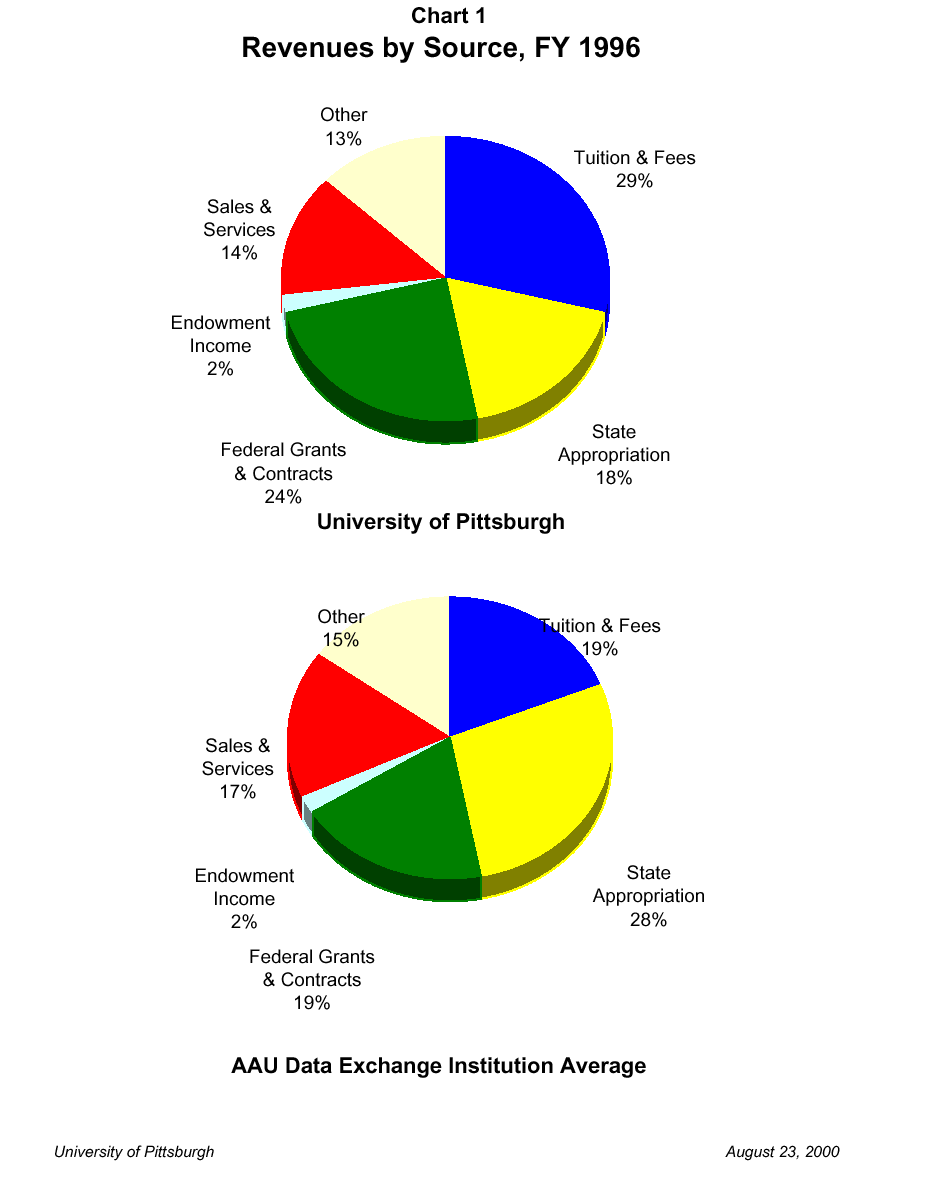
As Dennis Jones of the National Center for Higher Education Management Systems (NCHEMS) stated in an earlier appearance before this Committee, Pennsylvania higher education institutions spend at approximately the same rate per student as comparable public institutions around the country, but the costs are divided quite differently. As a result, Pennsylvania has a reputation as a high tuition, high aid state. The impact of this funding approach is displayed on Chart 1, a 1996 study that contrasted the revenue of the University of Pittsburgh with those of the other 31 public research universities that are members of the American Association of Universities (AAU). The most striking feature of the comparison is that, while all the institutions derived 47% of their revenue from the combination of tuition and state appropriation, the relative percentages were nearly reversed at Pitt, which received 18% of its revenue from the Commonwealth as compared to the average 28% at the peer universities. In more recent years, Pitt still has a pattern of funding that is atypical: in 1999, for example, at neighboring institutions like Maryland, Ohio State, and Rutgers, the average state appropriation provided 28.3% of total revenue and tuition 23.5%. For Pitt during that same year, Commonwealth funding provided only 15% and tuition 26% of total revenue.
Cost Drivers of Higher Education
The primary drivers affecting overall costs at Pitt are quality improvements, inflation, the nature of the academic programs, and location.
Impact of Cost Drivers on Tuition Policy
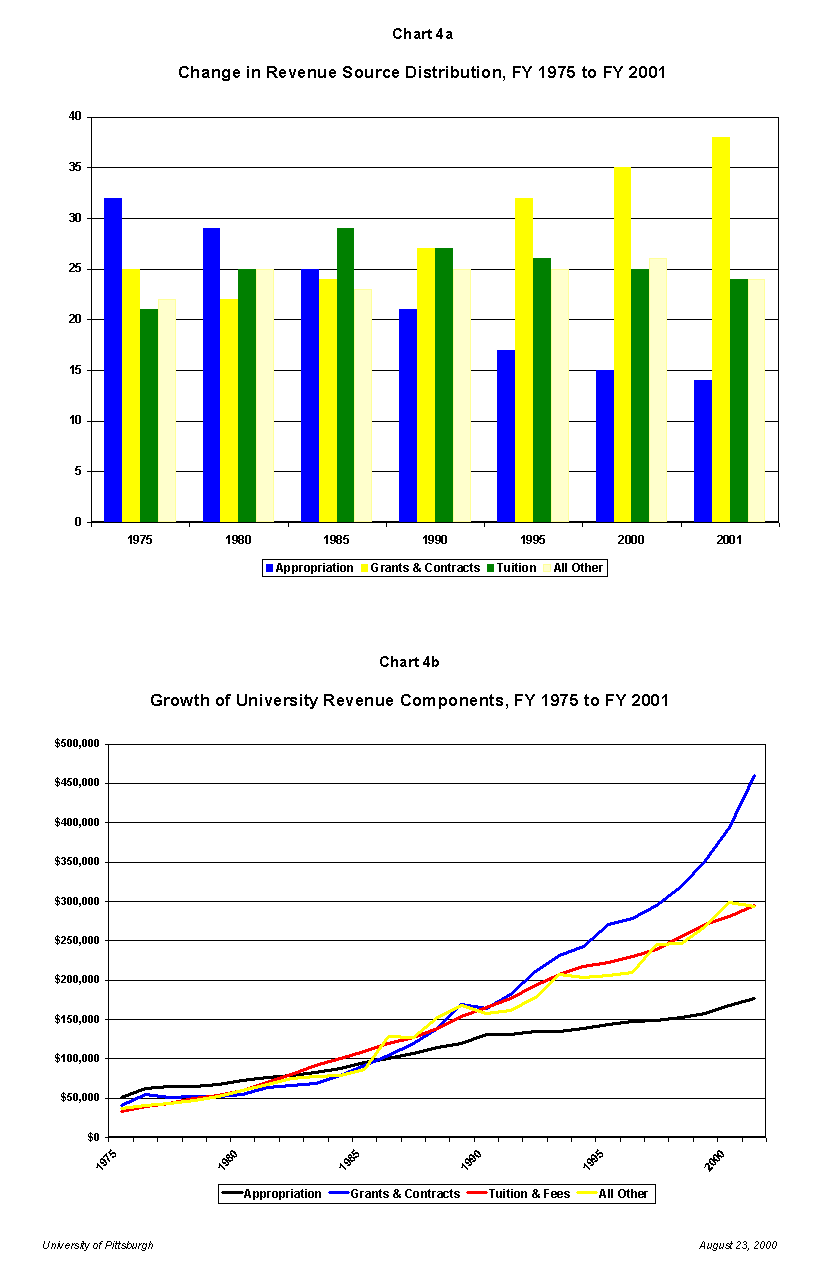
Not surprisingly, the impact of Commonwealth funding policies, quality improvements, inflationary pressures, academic structure, and location on University tuition is profound. In 1975, the Commonwealth provided 32% of the University's revenue and tuition only 21%. By 2000, the Commonwealth's contribution had declined to 15% and tuition had risen to 25%. For 2001, despite the significant increase in the Commonwealth appropriation, it will only provide 14% of total revenue. The University has worked extremely hard to increase all of its revenue sources, as Chart 4 illustrates. As a result of these efforts, the percentage of total University revenues that derive from tuition has steadily declined from a high of 29% in 1985 to a projected 24% in 2001.
University Investment Strategy
To understand our current tuition structure, two factors have to be particularly emphasized: the significant quality investments that the University has made in its programs and services; and the extent to which it has maintained access by increasing financial aid.
The inflation indices
by design exclude improvements in quality. The University has not, however,
been standing still during this period, particularly during the past five
years. The investments in quality have been dramatic and significant, totaling
in addition to the extensive reallocations that are part of the regular budget
and planning process, a specifically identifiable $32,100,000. Were these
targeted improvements deducted from the tuition revenue, which total $56,600,000,
the net revenue that would remain for other institutional purposes has been
only $24,500,000. In other words, 2.5% of the average 4.4% annual tuition
increases since 1995 has been directed to funding these specific quality improvements.
The Cost of Access
The University is
committed to ensuring access to qualified students. Financial aid increases
that have been funded within the budget during the last six years total $22,800,000.
Since accounting rules require the University to report tuition revenue as
a net of financial aid, the actual tuition revenue that the University has
received as a result of its rate increases since 1995 is not the gross tuition
revenue of $56,600,000 but the net tuition revenue of $33,800,000. The
impact of this additional financial aid has therefore been to reduce the effective
tuition increase from an annual rate of 4.4% to an adjusted rate of 2.6%.
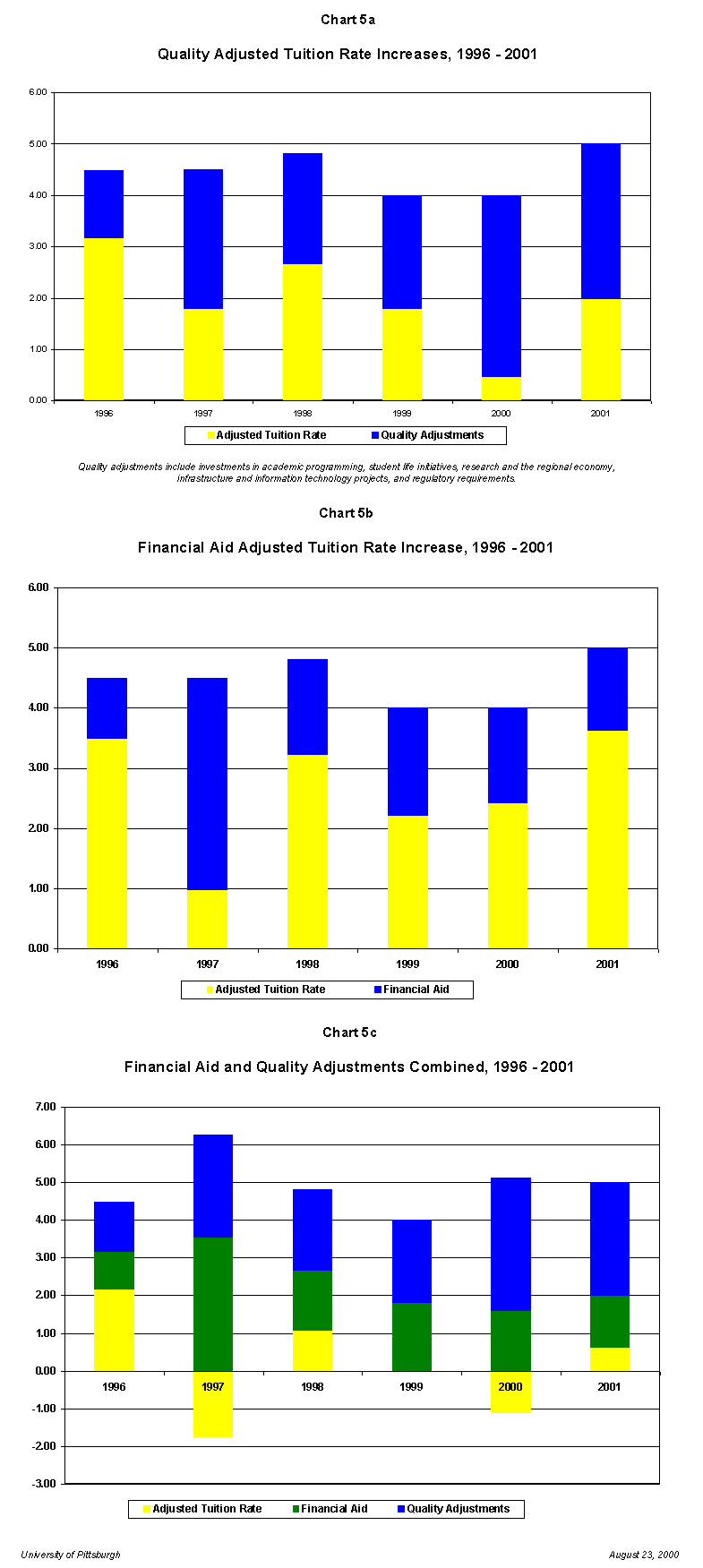
If one adds the quality improvements to the financial aid increases, they
account for almost the entire tuition increases over the past six years. Chart
5 shows the details of the analysis.
Because of the relationship
of adequate financial aid to access, it is worth looking at how the University
allocates its financial aid resources. Since a large fraction of the University's
enrollment is graduate and professional, a significant proportion of its aid
was traditionally expended on those students. In 1995, for example, the University
budgeted 77% of its total financial aid--$30,600,000--on graduate and professional
students. Approximately $9,000,000 was directed at undergraduate students.
Because of the University's renewed commitment to undergraduate education,
it has increased substantially the resources dedicated to undergraduate financial
aid. The result is that for 2001, the budget for undergraduate financial aid
has grown to $21,900,000. The annualized rate of increase for budgeted
undergraduate financial aid over the past six years has been 23.5%; during
the same period, graduate financial aid has increased at an annualized rate
of only 4%. As a result of this differential growth rate, in 2001 undergraduate
financial aid constitutes 36.6% of total institutional aid, up from 23% in
1995. Both the substantial increase in dollars and the change in their distribution
demonstrate the commitment of the University to ensuring access to undergraduate
students. University financial aid, coupled with state and federal aid programs
(Pitt students receive approximately $30,500,000 in federal and state grants
and $134,400,000 in loans), make Pitt highly affordable, particularly in the
context of the significant improvements in quality. The value of a Pitt education,
relative to its cost, has clearly increased substantially.
Pitt and the New Economy
The new economy Pennsylvania is developing is based on knowledge, discovery, innovation, and internationalism, all of which are at the core of the programs of the University of Pittsburgh. The achievement of that new economy requires continued investment by the Commonwealth to ensure that Pitt provides the talented graduates with the necessary skills and houses the creative faculty with the ability to innovate. One small example of the new costs that Pitt is bearing as part of its partnership with the Commonwealth is reflected in its annual expenditures in the area of technology transfer, a vital component of the new economy, which has increased from less than $400,000 in 1995 to nearly $2,500,000 in 2001. Such an investment will pay off handsomely, but the resources required to support such growing levels of investment must continue to be forthcoming if the full potential of the partnership is to be achieved.
Attachments
Robert F.
Pack
August 23, 2000