


|
|
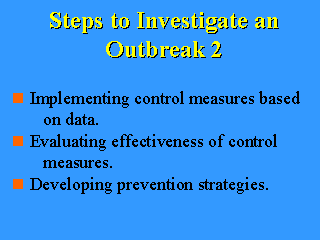
| Control measures are often fairly standard and, in the case of foodborne illness, are targeted at removing the source and preventing secondary transmission. Control measures for type A outbreaks like the above example are minimal and involved making sure the contaminated food was destroyed. Those for type B outbreaks may be more complex. In the hepatitis case, this involved making sure that household contacts received appropriate prophylaxis and |
While outbreak investigations are often too late to be of benefit to those most directly involved, lessons learned from these investigations can be used to prevent future problems. If nothing else, the sequence of events leading up to the problem can be used as examples of carelessness. However, we often find additional ways microbes have been able to exploit our habits and practices, causing disease in human populations.
 Submit
your comments Submit
your comments |
Slide 25 of 25