Swanson Group · About
Academic genealogy
Each person here supervised the doctorate of the one above. Following the chain back takes eleven generations, through two Nobel laureates and the founder of the American Physical Society, to an eighteenth-century physician.
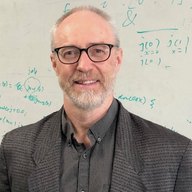 Today
Eric S. Swanson
Professor of Physics at the University of Pittsburgh. Works on how quarks and gluons build hadrons, especially exotics.
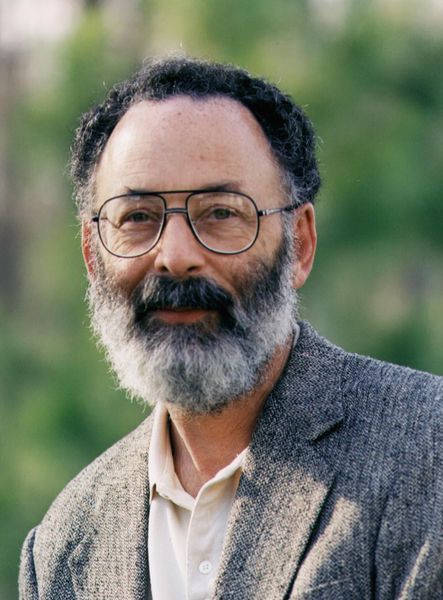 Generation 1
Nathan Isgur
Theoretical physicist and Jefferson Laboratory chief scientist. Co-winner of the Sakurai Prize in 2001.
Other students: Simon Capstick, Steve Godfrey, Kim Maltman, Colin Morningstar
-
Generation 2
Robert E. Pugh
Worked on early gauge models of the electroweak force, the interpretation of the Feynman path integral, and the S-matrix.
 Generation 3
Fritz Rohrlich
Performed seminal research on the foundations of quantum electrodynamics and the philosophy of science.
Natura inest in mentibus nostris insatiabilis quaedam cupiditas veri videndi.
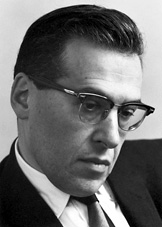 Generation 4
Julian Seymour Schwinger
Formulated the theory of renormalization. Awarded the Nobel Prize in Physics in 1965 for his work on quantum electrodynamics.
Other students: Roy Glauber, Ben Mottelson, Sheldon Glashow, Walter Kohn, Bryce DeWitt, Daniel Kleitman
 Generation 5
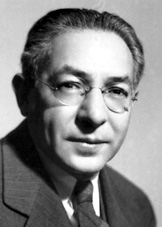
Isidor Isaac Rabi
Investigated the nature of the force binding protons to atomic nuclei. This work led to the molecular-beam magnetic-resonance method, for which he was awarded the Nobel Prize in Physics in 1944. One of the founders of Brookhaven National Laboratory and CERN.
Other students: Norman Ramsey, Martin Perl
-
Generation 6
Albert Potter Wills
Known for his work on magnetic materials.
Other students: Francis Bitter, Ralph Kronig
 Generation 7
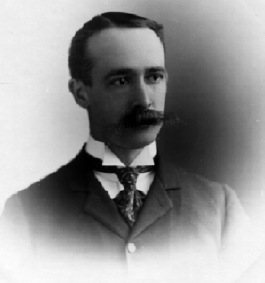
Arthur Gordon Webster
Worked on acoustics and mechanics, and founded the American Physical Society. Took his own life when the university president threatened to close the physics department.
Other students: Robert Goddard
Wikipedia Clark University physics history (if you thought your departmental politics was bad, read this)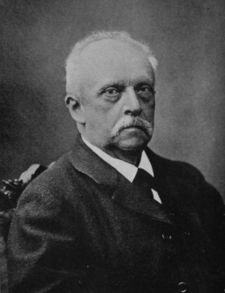 Generation 8
Hermann von Helmholtz
German physician and physicist. In the words of the 1911 Britannica,
his life from first to last was one of devotion to science, and he must be accounted, on intellectual grounds, as one of the foremost men of the 19th century.
Other students: Albert Michelson, Wilhelm Wien, William James, Heinrich Hertz, Michael Pupin, Friedrich Schottky
 Generation 9
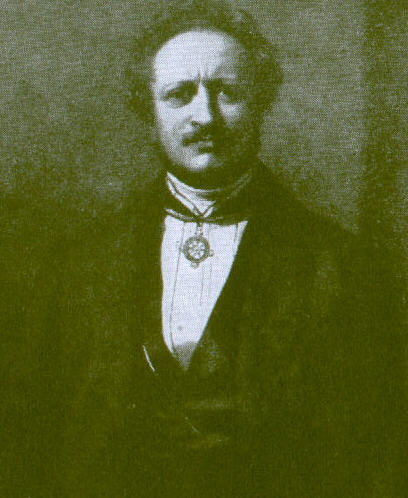
Johannes Peter Müller
Physiologist, comparative anatomist and ichthyologist, known for his discoveries and for his ability to synthesize knowledge. He shaped the modern science of physiology, helped found oceanography, and made Berlin one of Europe's leading centres for medical research. Used a severed head propped on his wife's piano to study the voice box. Believed to have taken his own life in despair over the drowning of a student when their steamship sank in the Baltic; Müller himself survived by clinging to debris.
Other students: Emil du Bois-Reymond, Theodor Schwann, Jakob Henle, Carl Ludwig
 Generation 10
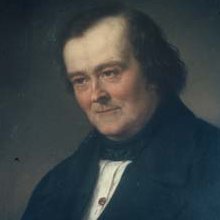
Philipp Franz von Walther
Introduced the modern era of cranioplasty; an early researcher on galvanism and physiology.
Other students: J. F. Dieffenbach, L. Stromeyer, E. Zeis, C. von Textor
 Generation 11
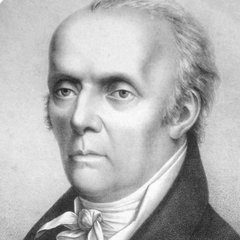
Johann Peter Frank
The first to define diabetes insipidus.
Frank is indisputably one of the most outstanding physicians of all time.
Other students: Joseph Eyerel