Neural Dynamics of Motor Learning & Adaptation

Exploring the Frontiers of Primate Neurophysiology

Research

Our research investigates the neural circuit mechanisms underlying motor skill learning and sensorimotor adaptation. By integrating neurophysiology, causal manipulations, and sophisticated behavioral paradigms in non-human primates, we aim to uncover how the brain orchestrates flexible motor behavior.

1) Motor Skill

The acquisition and retention of skilled sequential movements are fundamental to nearly every voluntary action. Our work examines the temporal evolution of skill learning and long-term maintenance across multiple cortical and subcortical areas. We focus on how different areas make distinct functional contributions to motor expertise.
2) Sensorimotor Adaptation

Sensorimotor adaptation enables accurate voluntary movement by updating motor commands in response to environmental changes. By combining pharmacological manipulations, neural recordings, and anatomical tracing, we aim to determine how distinct circuits and cell types support behavioral adaptation.

Neural recording data

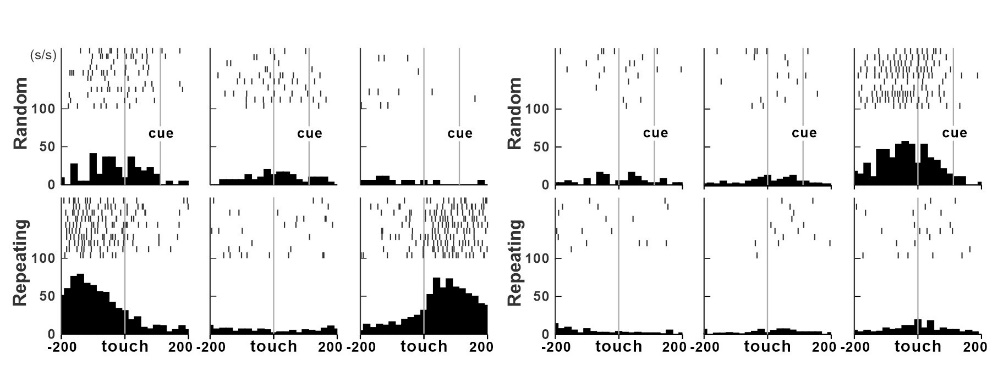
Figure: Activity of a dorsal premotor cortex (PMd) neuron during performance of the Random (visually guided) and Repeating (memory guided) modes of the sequential reaching task.

Funding

The laboratory is supported by competitive federal and international funding to investigate neural mechanisms of motor learning and consolidation in non-human primates.

  • Current grant
    National Institute of Neurological Disorders and Stroke (NINDS)
    R01 NS129551 (PI: M. Ohbayashi)

  • Prior grants
    National Institute of Neurological Disorders and Stroke (NINDS)
    R21 NS101499 (PI: M. Ohbayashi)
  • Brain Sciences Project, National Institutes of Natural Sciences
    BS291006 (PI: M. Ohbayashi)
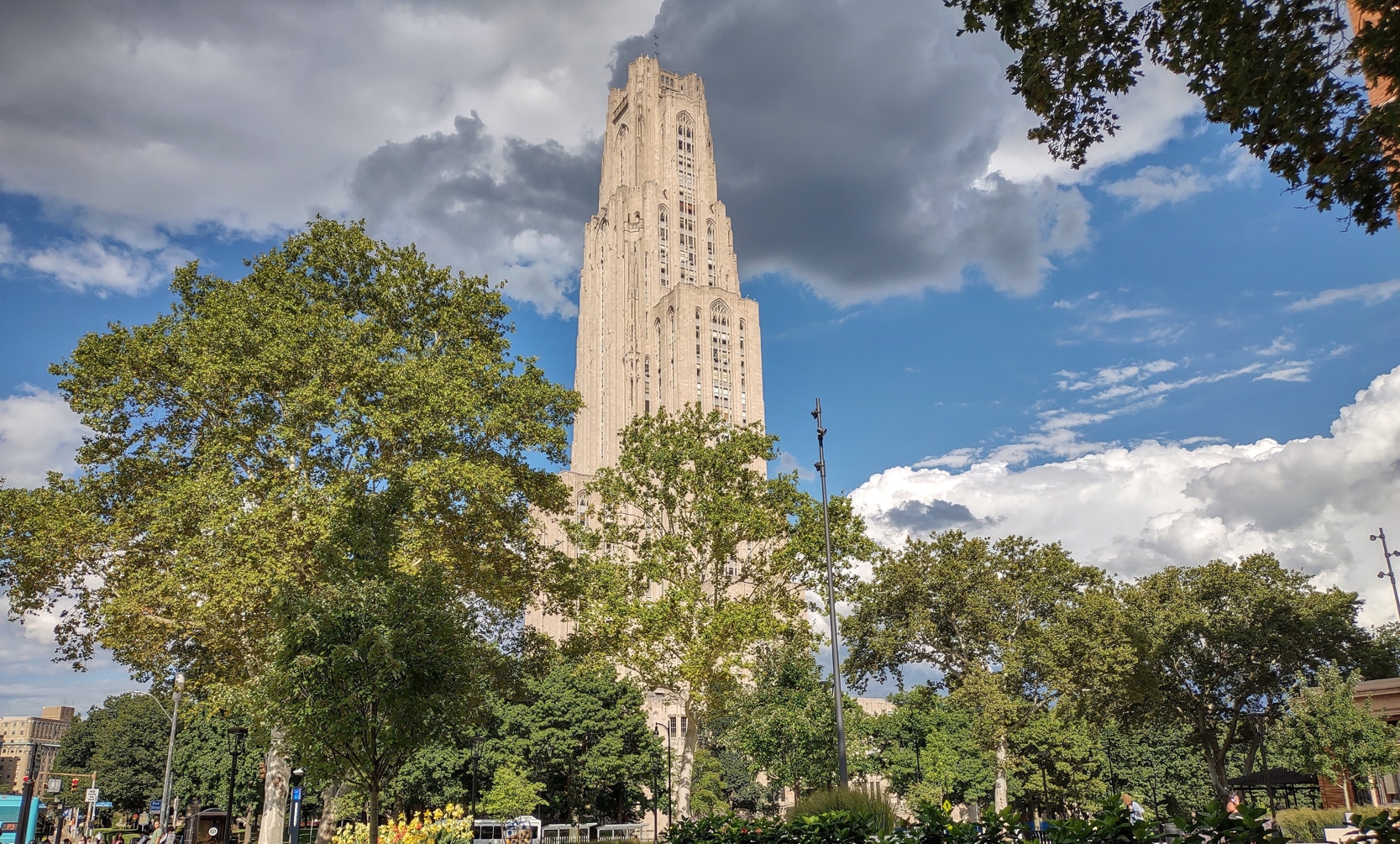
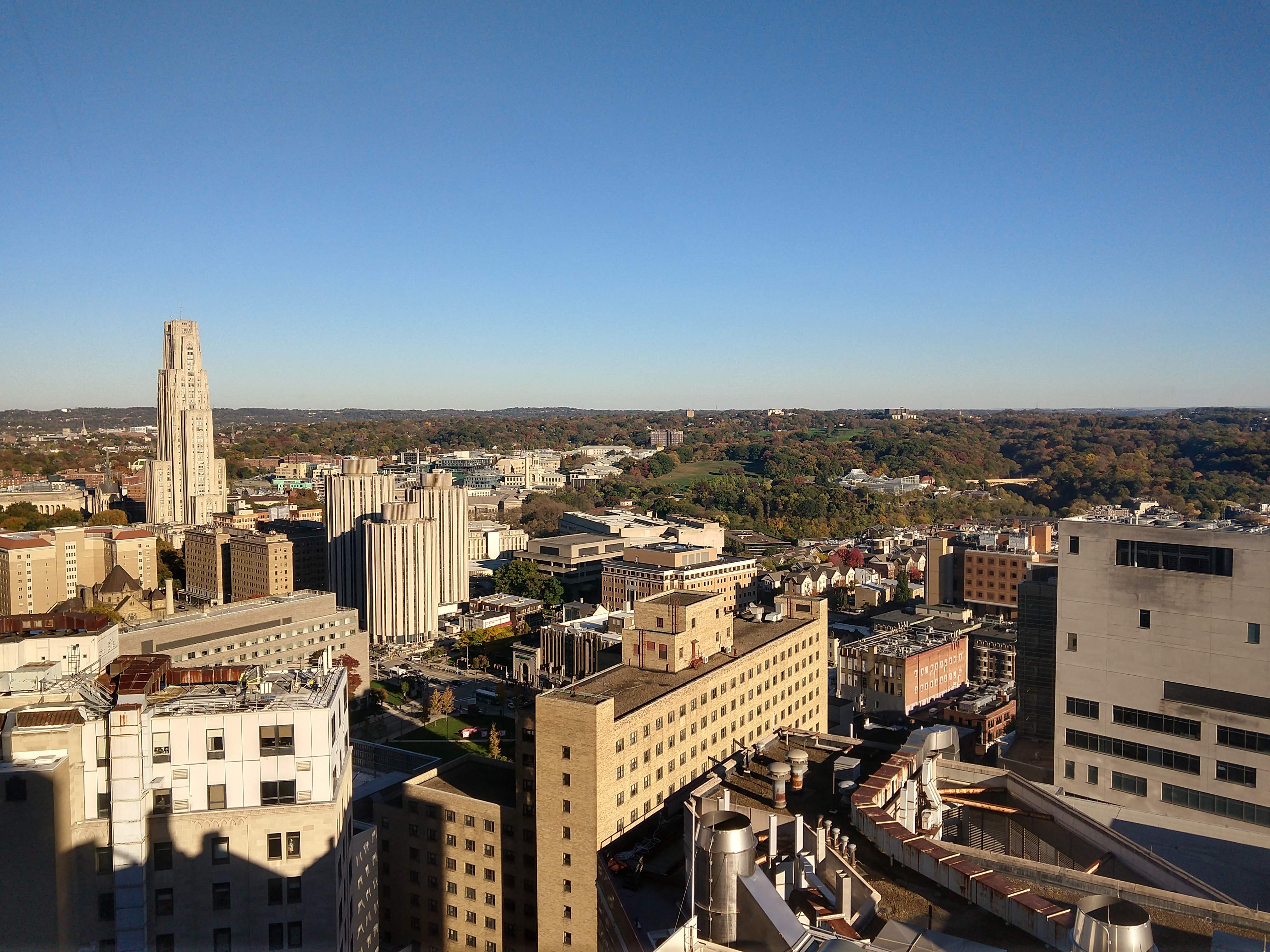
University of Pittsburgh Campus
Campus View

Contact

Machiko Ohbayashi, Ph.D.
Department of Neurobiology & Systems Neuroscience Center
University of Pittsburgh
3501 Fifth Ave, Pittsburgh, PA 15261
Email: machiko@pitt.edu