
Research
The lab develops statistical methodology motivated by real scientific problems. We are drawn to questions where the data are complex — censored, high-dimensional, correlated, or multi-source — and where careful modeling can change what a study is able to conclude. The four areas below describe our current directions; each is a placeholder to be expanded, with room for a representative figure.
Semiparametric methods for complex time-to-event data
We develop semiparametric and copula-based models for survival data that arise under interval censoring, left truncation, and multivariate (for example, bilateral or paired) outcomes. This includes estimation theory, goodness-of-fit diagnostics, and openly available software.

Precision medicine: subgroups and individualized effects
We build methods for identifying and drawing confident inference about subgroups with differential treatment efficacy in randomized trials, and for estimating individualized treatment effects. A recurring theme is logically coherent inference — conclusions about subgroups and their mixtures that remain consistent with one another.

Statistical & deep learning for genetic and multi-omics data
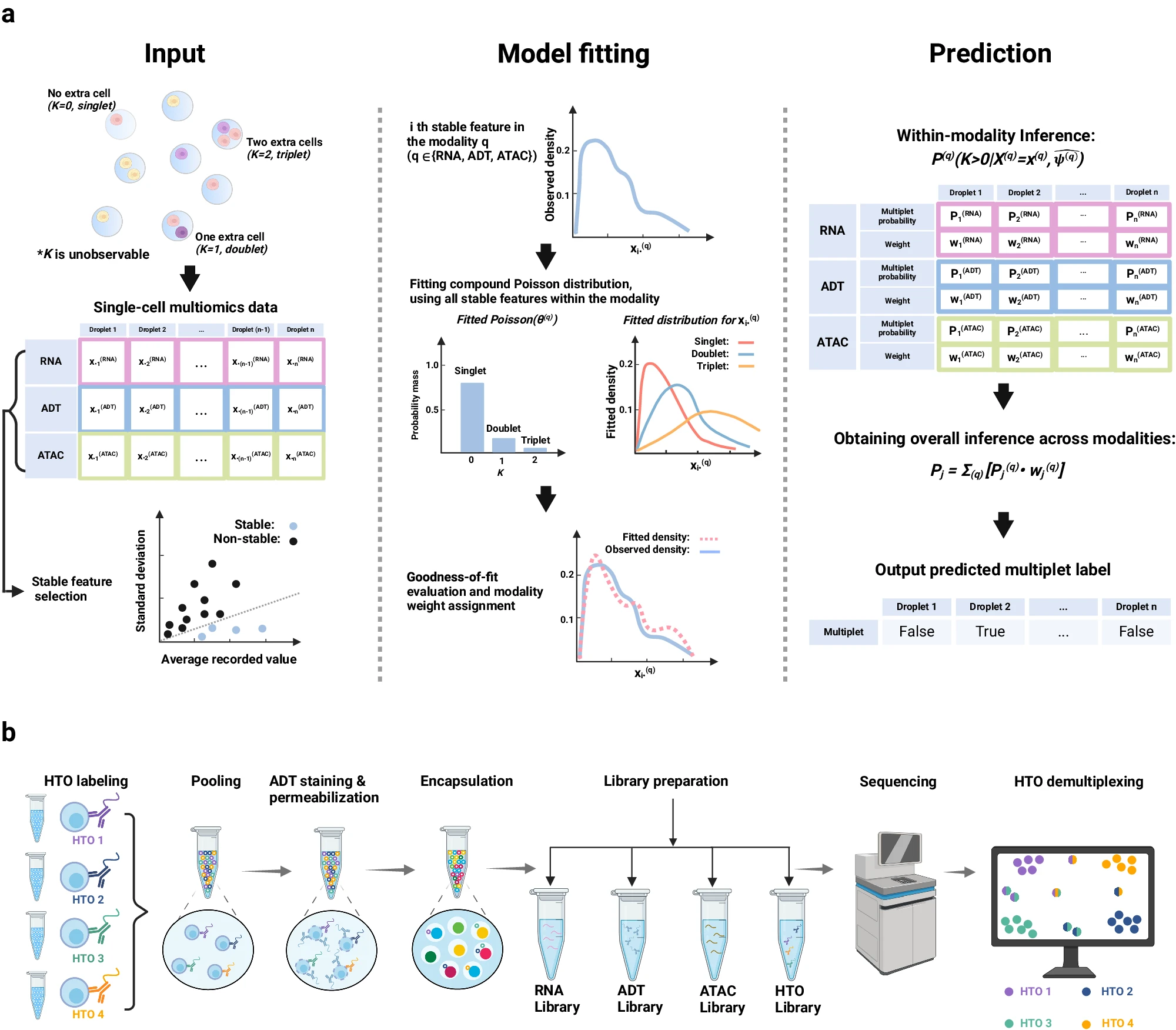
We design statistical and deep-learning methods for high-dimensional genetic and multi-omics data: prediction from genome-wide association data, model-based clustering of single-cell sequencing data, and the joint analysis of multiple data modalities.

Scientific collaboration
Our methods are grounded in long-standing collaborations — among them studies of age-related macular degeneration, Alzheimer's disease and related psychosis, schizophrenia, and childhood asthma. These partnerships supply the questions that motivate new methodology and the data on which it is tested.
Funding
The lab's work is supported by federal and institutional grants. Recent and current awards include:
As principal investigator
- 2026–31Advancing deep survival methods for prediction, subgroup identification, and causal inference. NIH/NIGMS, R35GM164304.
- 2022–27New statistical methods and software for modeling complex multivariate survival data with large-scale covariates. NIH/NIGMS, R01GM141076.
- 2025–26Enhancing pulmonary function assessment and out-of-clinic care through smartphone-based ultrasonic technology (SURE). University of Pittsburgh (SSOE / SPH / CTSI).
- 2025Multiomic profiling of lipidomic and proteomic associations in patients prior to developing asparaginase-associated pancreatitis. Stanford University.
As co-investigator (selected)
- 2022–27SCH: New advanced machine learning framework for mining heterogeneous ocular data. NIH/NIBIB, R01EB034116.
- 2023–28Providing new insight into adolescent dendritic development. NIH/NIMH, R01MH132586.
- 2018–28Accelerating treatment development for psychosis in Alzheimer's disease. NIH/NIMH, R01MH116046.