


|
|
|
front |1 |2 |3 |4 |5 |6 |7 |8 |9 |10 |11 |12 |13 |14 |15 |16 |17 |18 |19 |20 |21 |22 |23 |24 |25 |26 |27 |28 |29 |30 |31 |32 |33 |34 |35|36 |37 |38 |39 |40 |41 |42 |43 |44 |45 |46 |47 |48 |49 |50 |51 |52 |53 |54 |55 |56 |57 |58 |59 |60 |61 |62 |63 |64 |65 |66 |67 |68 |review |
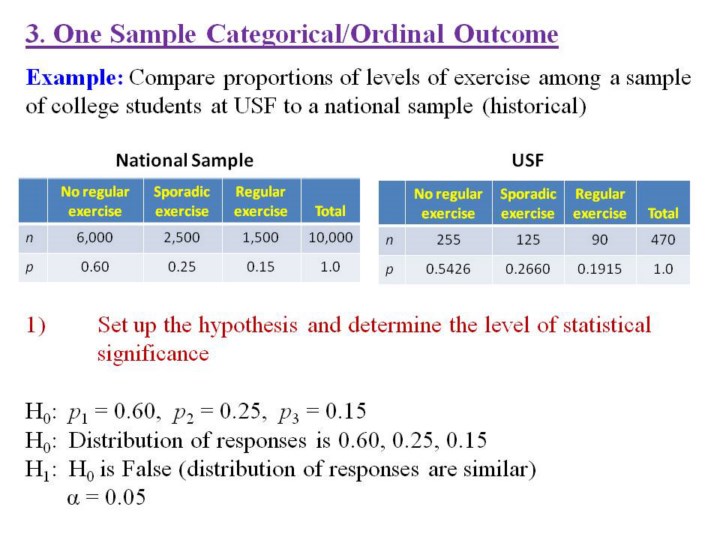 |
1.Here
is an example to compare exercise behavior among USF students to a
national (historical) sample.
2.There
data are grouped into 3 categories of exercise status ranging from no
regular exercise to regular exercise.
3.The
null hypothesis is that the proportions of students in each category of
exercise are similar between the USF students and a national sample.
|