



How quarks and gluons build hadrons, and the exotic states they make
Theory of hadron structure and interactions, with an emphasis on exotic states near thresholds, gluonic excitations, and the methods needed to extract physics from modern data.
Research
Quantum chromodynamics is easy to write down and hard to solve. These are the questions the group works on; each card links to the papers in that area.
XYZ states, molecules and cusps
Since the X(3872), dozens of hadrons have turned up that do not fit the quark model. Are they molecules, tetraquarks, hybrids, or effects of nearby thresholds? We build models that tell these apart and confront them with data.
Watching a peak form: J/ψ J/ψ rescattering
The structure seen by LHCb near 6.9 GeV in the J/ψ J/ψ spectrum, built up step by step from charmonium pairs scattering into each other, with no tetraquark put in by hand.
Hybrids and glueballs
Hadrons in which the gluons themselves are excited: their spectrum, decays and potentials, and predictions for the GlueX experiment at Jefferson Lab.
One model for gluonic hadrons
One Hamiltonian for quarks and constituent gluons, fixed on charmonium, then tested on hybrids, hybrid baryons, glueballs and gluelumps against lattice QCD. With C. Farina, in progress.
Hadronic interactions
Forces between hadrons from quark and gluon exchange: meson–meson and nucleon scattering, and how charmonium breaks up in hot hadronic matter.
The QCD vacuum
Confinement and chiral symmetry breaking from Coulomb-gauge Hamiltonian QCD, Dyson–Schwinger equations and lattice gauge theory.
Pole extraction and model averaging
Coupled-channel fits to e⁺e⁻ → open-charm data, pole searches on several Riemann sheets, and averaging over large model ensembles.
Dalitz plots for Y → ψπ⁺π⁻ and Y → πD̄D*
The amplitude model for both channels, with the Zc(3900) coupled-channel lineshape, run live in the browser: move √s and the couplings and watch both Dalitz plots respond. A demonstration with placeholder couplings, not a fit; the first load takes 10–30 seconds.
Publications
Every paper by date, how the citations accumulated, which papers are read together, and, for any one paper, what it builds on and what builds on it.
Paper timeline
Circle area ∝ citations. Click a paper to open it in the citation explorer.
Citations by year
By the year of the citing paper, stacked by research area.
Citation explorer
Click a paper on the timeline or the co-citation map. Its references appear on the left in topic lanes; click the dark square to swing round to the papers that cite it.
List of papers by topic
Co-citation map
Papers often cited together sit close; lines join papers cited together by later work.
Most co-cited pairs
Teaching
Courses, a textbook, and notes for students.
Computational Physics
Computation as a way into physics that pencil and paper cannot reach: chaos and the logistic map, molecular dynamics, quantum bound states and spin chains, and Monte Carlo simulation of the Ising model and lattice gauge theory, with the numerical methods behind them. For graduate students; no prior programming experience required.
Machine Learning in the Sciences
Modern machine learning from a scientist's point of view, for senior undergraduates and beginning graduate students. Starting from the single perceptron and building on linear algebra, statistics and statistical mechanics, the course works up to transformers, generative models and graph networks, with examples from physics, chemistry, biology and climate. Coding is in Python; AI assistants are allowed, provided students document their code design and unit tests.
Science and Society
E. S. Swanson and M. L. Good, Springer (2026). An undergraduate textbook for non-science majors: how science works, science versus pseudoscience, and the physics behind energy, climate, nuclear power and sustainability. The new edition expands climate change, electric vehicles and future energy sources, and adds a module on critical thinking about pseudoscience and conspiracy theories.
Applied Computational Physics
J. F. Boudreau and E. S. Swanson, Oxford University Press (2018). Modern computing for physicists, from C++ and numerical methods to Monte Carlo and parallel computing.
Outreach
Physics for everyone: books, op-eds, and commentary in the press, on exotic particles, cell phones and 5G, climate, missile defence, and figure skating.
Science and Society
E. S. Swanson and M. L. Good, Springer, 2nd edition (2026). Understanding scientific methodology, energy, climate, and sustainability.
Applied Computational Physics
J. F. Boudreau and E. S. Swanson, Oxford University Press (2018).
Constructing the Universe
What is the universe made of, and how do we know? From the Greek atomists to quarks, gluons, the Higgs boson and exotic hadrons: the people, the experiments and the machines.
Op-eds and articles
- 2017Should kids have cell phones? WalletHub
- 2015Robot cars Pittsburgh Post-Gazette
- 2013New particle hints at four-quark matter APS Physics Viewpoint
- 2012Why the Higgs particle matters Pittsburgh Post-Gazette
- 2011These studies are killing me Pittsburgh Post-Gazette
- 2011Keep your hands off of my theory! Pittsburgh Post-Gazette
6 more
- 2010Weather and climate aren't the same Pittsburgh Post-Gazette
- 2009We can't run and we can't hide Pittsburgh Post-Gazette
- 2008Stop freaking out about cell phones! Pittsburgh Post-Gazette
- 2005Na tropie egzotycznych hadronów Postępy Fizyki
- 2001Rumsfeld's folly: national missile defense Pittsburgh Post-Gazette
- 2000The search for QCD exotics American Scientist
In the press
- 2024New course module helps students analyze pseudoscientific claims Pitt News
- 2022Physicists find signs of pentaquark states and new matter phys.org
- 2019Worried about 5G's health effects? Don't be Wired
- 2016The social life of quarks Science
- 2015Glueballs are the missing frontier of the Standard Model Ars Technica
- 2015Pentaquarks make their debut Scientific American
More press coverage
- 2018The quintuple is the almost-impossible future of figure skating Inverse
- 2016Exotic new atom discovered in nine-year-old data PBS NOVA
- 2015The big bang blip New Scientist
- 2015CERN scientists claim discovery of new particles New York Times
- 2014A trip to the quark zoo APS podcast
- 2014Indisputable proof of a new four-quark particle Popular Science
- 2013Mysterious subatomic particle may represent exotic new form of matter Wired
- 2013Mögliche neue Materieform Spiegel Online
- 2012The cold hard facts Pittsburgh Post-Gazette
- 2008The charming case of the X(3872) Symmetry
- 2007Physicists spot unusual charged meson Physics World
- 2004Misbehavin' meson: perplexing particle flouts the rules Science News
Cool Stuff
Simulations and side projects, most of them running in the browser.
NEAT0: evolving foraging creatures
Creatures with evolvable neural-network brains learn to forage under selection alone. Movies of the behaviours that evolve.
Cahn–Hilliard droplets
An interactive phase-separation simulation, with notes on the numerical scheme.
Turing patterns
Two reacting chemicals that spread at different speeds turn a uniform mix into spots, stripes and worms. Runs in the browser, with the Python code.

Learn quantum mechanics! A series of short animated videos that tells how quantum mechanics was discovered, one physicist at a time: what they saw, what they guessed, and why it turned out to be less wrong than what came before.
Work in progress. The series is still being made: the videos are not out yet, and the episodes, titles and pictures shown here may change.
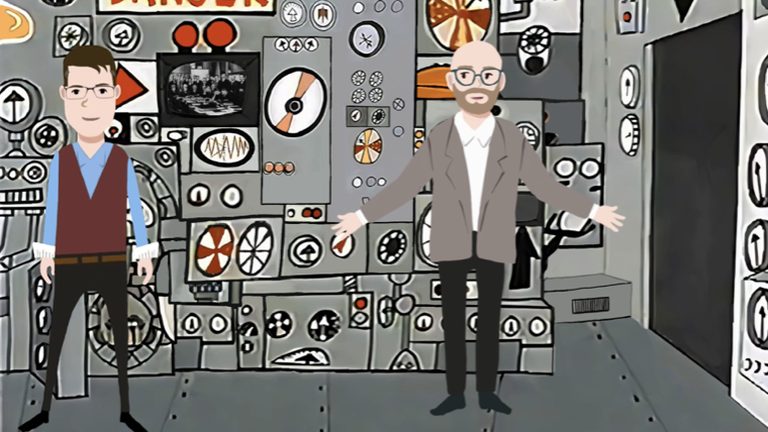 Video coming soon
Meet your guides
Two presenters, one very dangerous control room, and the question of where quantum mechanics came from.
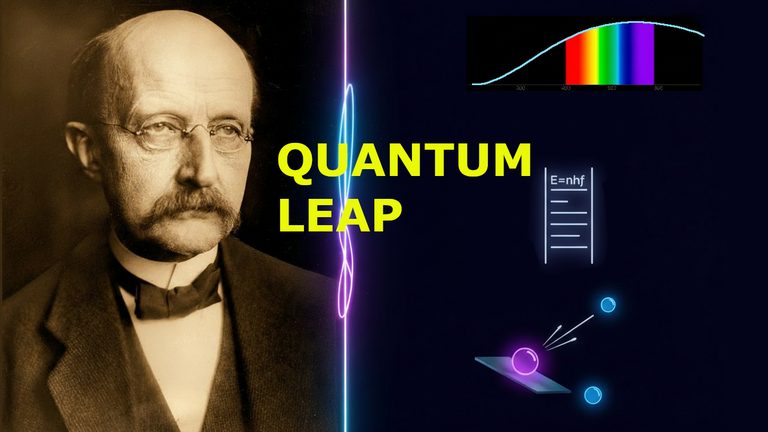 Video coming soon
Quantum leap
Hot objects glow with a spectrum classical physics could not explain. Planck's fix, E = nhf, started a revolution he did not quite believe in.
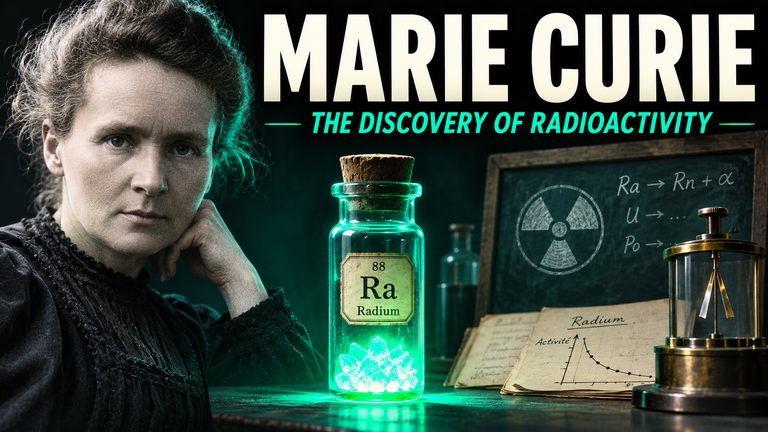 Video coming soon
The discovery of radioactivity
Uranium rays, polonium, radium, and the realization that atoms are not the unchangeable things everyone thought.
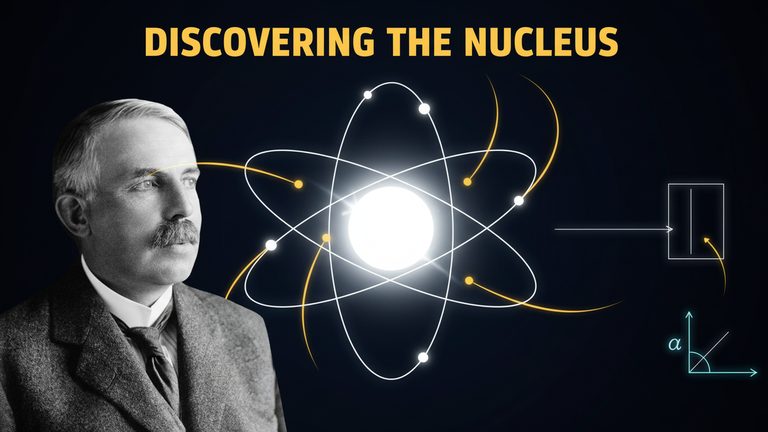 Video coming soon
Discovering the nucleus
Alpha particles fired at gold foil, a few bouncing straight back, and the atom turning out to be almost entirely empty.
 Video coming soon
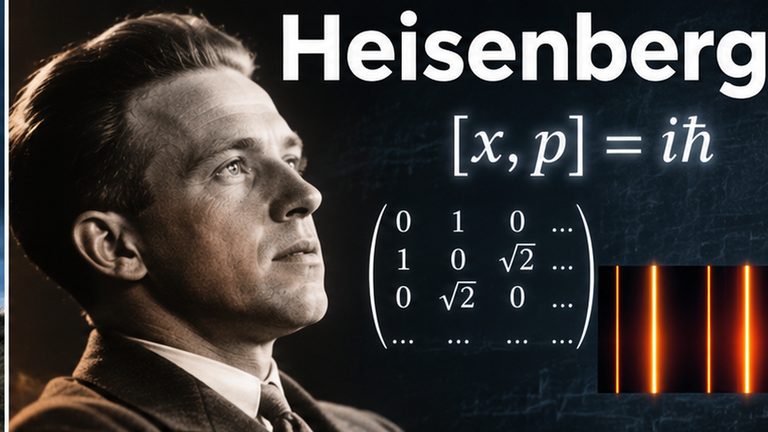
Heisenberg
Matrices, a holiday on Heligoland, and the uncertainty principle: why position and momentum cannot both be pinned down.
 Video coming soon
Schrödinger
A wave equation for the electron, and a cat in a box to show how strange superposition looks when taken at its word.
 Video coming soon
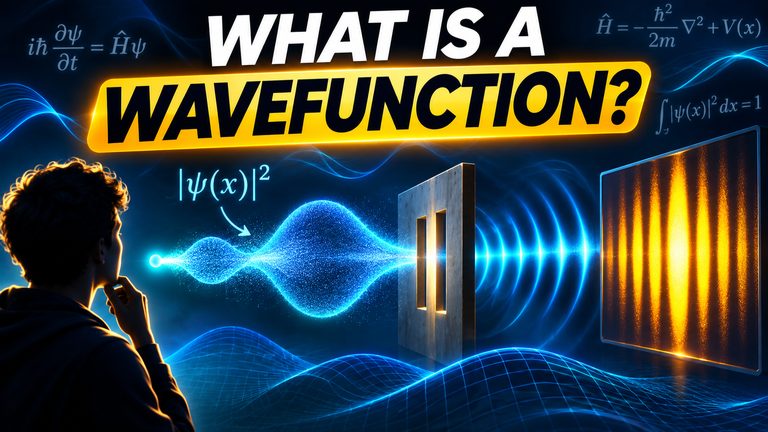
What is a wavefunction?
A wave passes through two slits and lands as fringes on a screen. So what is doing the waving, and what does |ψ|² tell you?
 Video coming soon
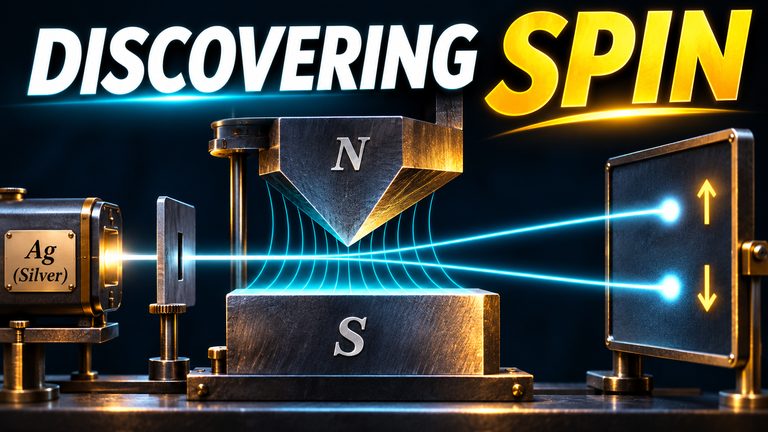
Discovering spin
Silver atoms fired through a magnet split into exactly two beams, and physics gains a property with no classical counterpart.
 Video coming soon
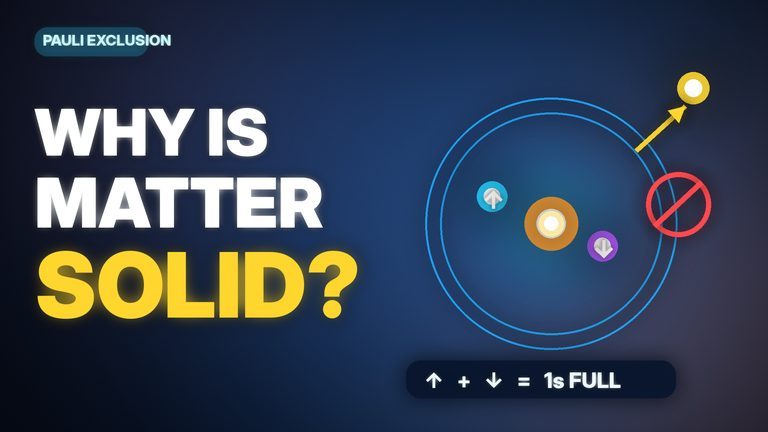
Why is matter solid?
One spin up, one spin down, and the 1s shell is full. How the exclusion principle creates matter.
About
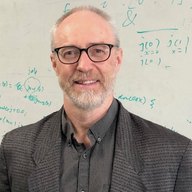
Professor of Physics, University of Pittsburgh
Eric Swanson is a professor of physics at the University of Pittsburgh and a Fellow of the American Physical Society (2010). His research asks how quarks and gluons build hadrons, especially the unusual combinations called exotics, and he writes and speaks about science for the public.
How quarks and gluons build the universe
I am interested in learning how quarks and gluons build the universe, especially how they form unusual combinations, called exotics. I am also passionate about science communication to the public. The former is exemplified in my research, while the latter is shown in the books, op-eds, and articles under Outreach, and in my consulting work.
Read more
Quarks are the most basic bits of matter which form all other massive particles such as protons, neutrons, pions, and many others (electrons and neutrinos are not made of quarks). Gluons are the carriers of the force which acts between quarks (much the same as photons are the carriers of the electromagnetic force). The whole thing is described by a quantum field theory called Quantum Chromodynamics, or QCD for short.
Although it is easy to describe QCD (the whole theory can be written on one line), it embodies many fascinating phenomena. These include color confinement, asymptotic freedom, spontaneous chiral symmetry breaking, important topological features, the quark–gluon plasma phase transition, and the emergence of an entirely new class of matter made of gluons (like atoms made of pure light!).
QCD is also widely applicable. It is used in nuclear physics (how the nuclei of atoms are formed and behave), astrophysics (the formation of neutron and quark stars), cosmology (the very early universe is thought to have been a quark–gluon plasma), and hadronic physics (the physics of protons, pions, etc). You can find a pedagogical introduction to particle physics here and an introduction to QCD in an article I wrote for American Scientist.
My research concentrates on describing the structure and interactions of hadrons –– those particles which are made of quarks and gluons. I am especially interested in exotics, particles made in whole or in part by gluons. There is an active effort to discover these particles around the world. I have been part of the GlueX experiment at Jefferson Lab in Virginia, which searches for them, and I am a member of the ExoHad Topical Collaboration. Gluons are an especially interesting part of QCD because their peculiar properties are thought to underlie many of the interesting phenomena I mentioned above.
Much of my current work is on the exotic states found near thresholds in charmonium and bottomonium: whether they are molecules, kinematic cusps, or triangle singularities, and how to extract resonance poles reliably from data.
Understanding QCD also means understanding its vacuum. Earlier work used a numerical method called lattice gauge theory to probe different aspects of the QCD vacuum, and my students and I applied the Schwinger-Dyson formalism to nonperturbative properties of quantum field theory.
Adapted from the department profile page.
Supervisors of supervisors
Eleven generations back, with two Nobel laureates, the founder of the American Physical Society, and a severed head on a piano along the way.
People

Current collaborators
- Christian FarinaUniversity of Illinois Urbana-Champaign
- César Fernández-RamírezUNED, Madrid
- Nils HüskenJohannes Gutenberg University Mainz
- Richard F. LebedArizona State University
- Ryan E. MitchellIndiana University
- Adam SzczepaniakIndiana University and Jefferson Lab
Coauthors on papers since 2024, with affiliations as given on those papers (INSPIRE).
Graduate students and postdocs
Prospective graduate students and postdocs are welcome to get in touch; please include a CV and a short note on your interests.
3941 O'Hara Street
Pittsburgh, PA 15260